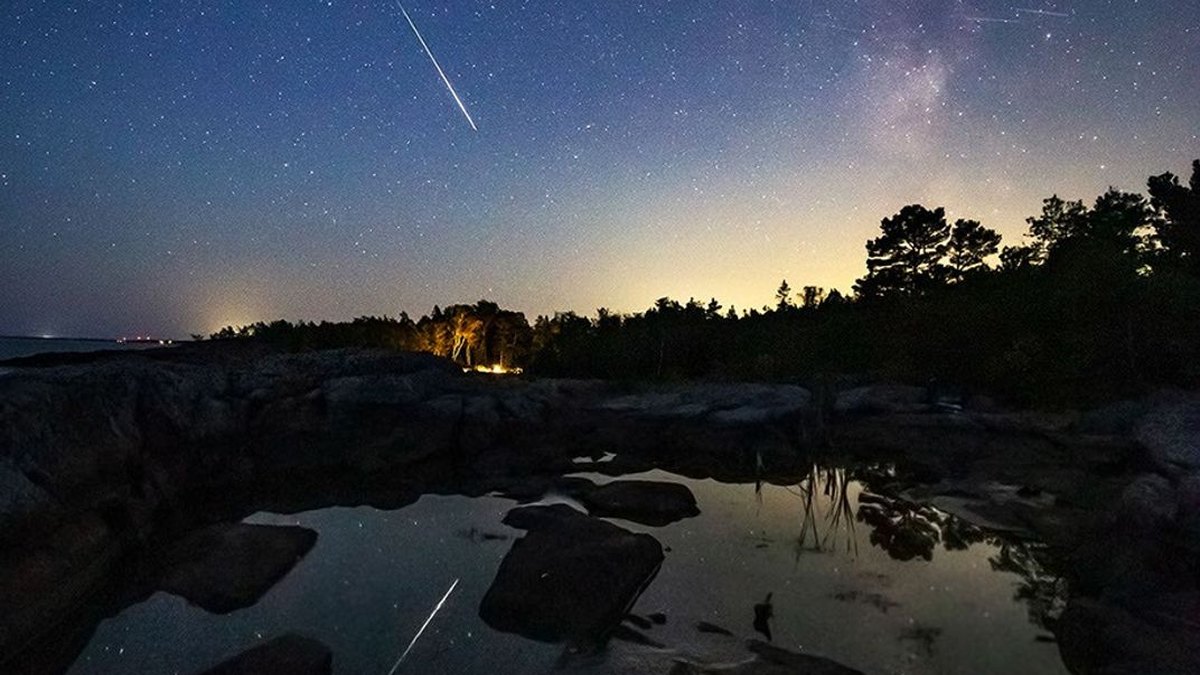
Sawirka Perseids-ka ee Sweden: Laba Meteor oo Dhalaalaya iyo Milicsigooda Biyaha
Roobka xiddigaha ah ee Perseid wuxuu gaaray heerkiisii ugu sarreeyay 12 Ogosto 2026 isagoo aan iftiinka dayaxu dhimay.
Sawir isku-dhejis ah oo laga qaaday xeebta Grisslehamn ee Sweden ayaa muujinaya laba meteor oo Perseid ah oo dhalaalaya iyo milicsigooda biyaha. Waxaa la qaaday 12 Ogosto 2026, oo ah maalintii ugu firfircoonayd roobka xiddigaha, iyadoo dayax cusub uusan iftiin dheeraad ah ku darin.
Asalka iyo Sameynta Roobka Xiddigaha
Roobka xiddigaha ee Perseid Meteor Shower wuxuu caan ku yahay xiddigo dhalaalaya oo degdeg ah, wuxuuna ka imaanayaa iftiin ka yimaada ururka xiddigaha ee Perseus. Sida lagu sheegay: "Known for its bright and fast meteors, the annual Perseid Meteor Shower comes to planet Earth's skies from a radiant in the heroic constellation Perseus".
Waxa roobkaas ka abuura waa quruurux boodh ah oo ka yimaada meeraha kometada 109P/Swift-Tuttle, kuwaas oo uumaya markay galaan jawaha dhulka. Qoraalku wuxuu leeyahay: "The popular northern summer celestial spectacle is created as grains of dust cast off along the orbit of periodic comet 109P/Swift-Tuttle vaporize in Earth's dense atmosphere, tracing brief, but beautiful streaks through the night".
Sawirka laga qaaday Grisslehamn
Sawirka la isku-duway waxaa laga qaaday meel u dhow tuulada xeebta ah ee Grisslehamn ee dalka Sweden, waxaana la qaaday 12 Ogosto, maalintii ugu firfircoonayd Perseids-ka. Qoraalku wuxuu xaqiijinayaa: "Taken near the shower's peak of activity on August 12, this composite image recorded two bright perseid meteors and one meteor's watery reflection from a location near the coastal village of Grisslehamn, Sweden".
Meteor-yadaasu waxay u dhalaalayaan ku dhawaad xiddigga ugu ifaya ee goobta, ee ah Altair, waxayna la socdaan asalka Milky Way ee aan cadcadnayn. Sida lagu xusay: "Almost as bright as Altair, brightest star on the scene, the meteors appear along with the faint, diffuse background of the Milky Way".
Dayax Cusub iyo Qeexitaanka Qorrax-madoobaadka
Sannadkan, heerka ugu sarreeya ee Perseids-ka wuxuu ku beegnaa Dayax Cusub, sidaa darteed iftiinka dayaxu ma uusan dhimin dhalaalka meteor-yada. Qoraalku wuxuu leeyahay: "This year, the shower's peak activity coincided with a New Moon, so perseid meteor flashes were undiminished by bright moonlight".
Dhacdadaas waxaa someli jiray qorrax-madoobaad la filayay, kaas oo ku beegnaa Dayaxa Cusub ee Ogosto 2026. Sida ku xusan: "And for many skywatchers, this night of bright perseid meteors followed their viewing of the silhouette of the New Moon in a much anticipated solar eclipse".
A stunning composite image captured two brilliant Perseid meteors and their watery reflection from the coastal village of Grisslehamn, Sweden, on August 12, 2026, just days before the shower's peak coincided with a New Moon and a highly anticipated solar eclipse.
The Perseid Meteor Shower: Origins and Nature
The annual Perseid Meteor Shower traces its radiant to the constellation Perseus and is produced when dust grains from comet 109P/Swift-Tuttle vaporize in Earth's atmosphere, creating brief but beautiful streaks of light across the night sky.
Known for its bright and fast meteors, this celestial spectacle has become one of the most popular northern summer events for skywatchers around the globe.
A Rare Alignment: New Moon and Solar Eclipse
This year, the Perseid peak activity coincided with a New Moon, ensuring that meteor flashes remained undiminished by bright moonlight and offering skywatchers an exceptional viewing experience.
For many observers, the night of bright Perseid meteors followed their viewing of the New Moon's silhouette during a much anticipated solar eclipse, making the event doubly memorable.
Capturing the Moment from Sweden's Coast
The composite image was taken near the peak of Perseid activity on August 12 from a location near the coastal village of Grisslehamn, Sweden, where two bright meteors and one watery reflection were recorded.
Almost as bright as Altair, the brightest star on the scene, the meteors appeared alongside the faint, diffuse background of the Milky Way, creating a breathtaking celestial display.