
11 dalal Yurub ayaa codsatay in la joojiyo codsiga 'xadgudubka' ee siyaasadda dibadda
11 dal oo ka mid ah Midowga Yurub ayaa wada saxiixay qoraal ay ku codsadeen hoggaamiyaha siyaasadda dibadda Kaja Kallas in la joojiyo codsiga 'xadgudubka' ee siyaasadda dibadda, iyagoo sheegay in xiriirka wadajirka ah uu noqonayo mid ka dhigaya amniga iyo xaqiijinta dhaqaalaha.
Qoraalka iyo codsiga
Dalalka Austria, Denmark, Belgium, Finland, France, Germany, Luxembourg, the Netherlands, Romania, Spain iyo Sweden ayaa wada saxiixay qoraal ay ku codsadeen hoggaamiyaha siyaasadda dibadda Kaja Kallas in la joojiyo codsiga 'xadgudubka' ee siyaasadda dibadda, iyagoo sheegay in xiriirka wadajirka ah uu noqonayo mid ka dhigaya amniga iyo xaqiijinta dhaqaalaha.
Qoraalka ayaa lagu sheegay in 'xiriirka wadajirka ah' uu yahay mid muhiim u ah aqoonsiga Midowga Yurub, balse waa in la hubiyaa inuu ka dhigo mid ka dhigaya amniga iyo xaqiijinta dhaqaalaha, iyadoo la raacayo shuruudaha siyaasadda dibadda.
Dhibaatada codsiga iyo tusaale
Siyaasadda dibadda ee Midowga Yurub waxay ku xiran tahay codsiga 'unanimity', taasoo ka dhigaysa in dal kasta uu kordhiyo awooddiisa siyaasadeed, iyadoo la raacayo shuruudaha siyaasadda dibadda.
Tusaale ahaan, hoggaamiyaha Hungary Viktor Orbán ayaa muddo 16 sano ah ku isticmaalay awooddiisa codsiga si uu uga faa'iideysto xiriirka wadajirka ah, iyadoo la raacayo shuruudaha siyaasadda dibadda.
Furaha iyo horumarinta
Dalalka Yurub ayaa codsaday in la isticmaalo 'passerelle clause' ee qodobka 31, kaasoo ka dhigaya in la beddelo codsiga 'unanimity' mid ka dhigaya amniga iyo xaqiijinta dhaqaalaha.
Germany iyo France ayaa wada qorshe ay ku doonayaan in la kordhiyo awoodda hoggaamiyaha siyaasadda dibadda Kaja Kallas, iyadoo la raacayo shuruudaha siyaasadda dibadda.
Eleven European Union member states have signed a joint letter calling for an end to obstructive vetoes that have long paralysed the bloc's foreign policy, arguing that the principle of sincere cooperation must take precedence over unilateral blocking.
A Joint Push for Reform
Austria, Denmark, Belgium, Finland, France, Germany, Luxembourg, the Netherlands, Romania, Spain and Sweden signed a letter addressed to High Representative Kaja Kallas and seen by Euronews. Germany, the largest member state, has been leading calls to reform the bloc's foreign policy.
The signatories argue that the Union's external action faces a fundamentally changed landscape, shaped by strategic competition, growing instability and attempts to undermine the rules-based international order. They warn that the ability to defend values and interests hinges on mobilising collective weight quickly and effectively.
Lessons from the Orbán Era
The letter draws on lessons from the 16-year tenure of Hungarian Prime Minister Viktor Orbán, who regularly used his veto power to extract concessions and advance his interests. Earlier this year, he triggered an unprecedented crisis by blocking a €90 billion loan for Ukraine over an unrelated dispute involving the Druzhba oil pipeline.
Based on these experiences, the signatories lay out five principles to guide the bloc's common foreign policy, including upholding sincere cooperation, increasing constructive abstentions and refraining from linking decisions to substantially unrelated matters.
The Passerelle Debate and Timing
The idea of activating the so-called passerelle clause under Article 31 to switch from unanimity to qualified majority voting has been a long-running debate in Brussels. Proponents say it would speed up decision-making, while opponents warn it would undermine democratic legitimacy and small member states consider the veto a useful last-resort tool.
The push to overhaul EU foreign policy has gained traction after Orbán's defeat, with concerns that Marine Le Pen's potential victory in the French presidential election next year could shut the window of opportunity. Germany and France have floated a plan to strengthen the role of Kaja Kallas under the direct supervision of European Commission president Ursula von der Leyen.
Ilaha iyo xuquuqda sawirka
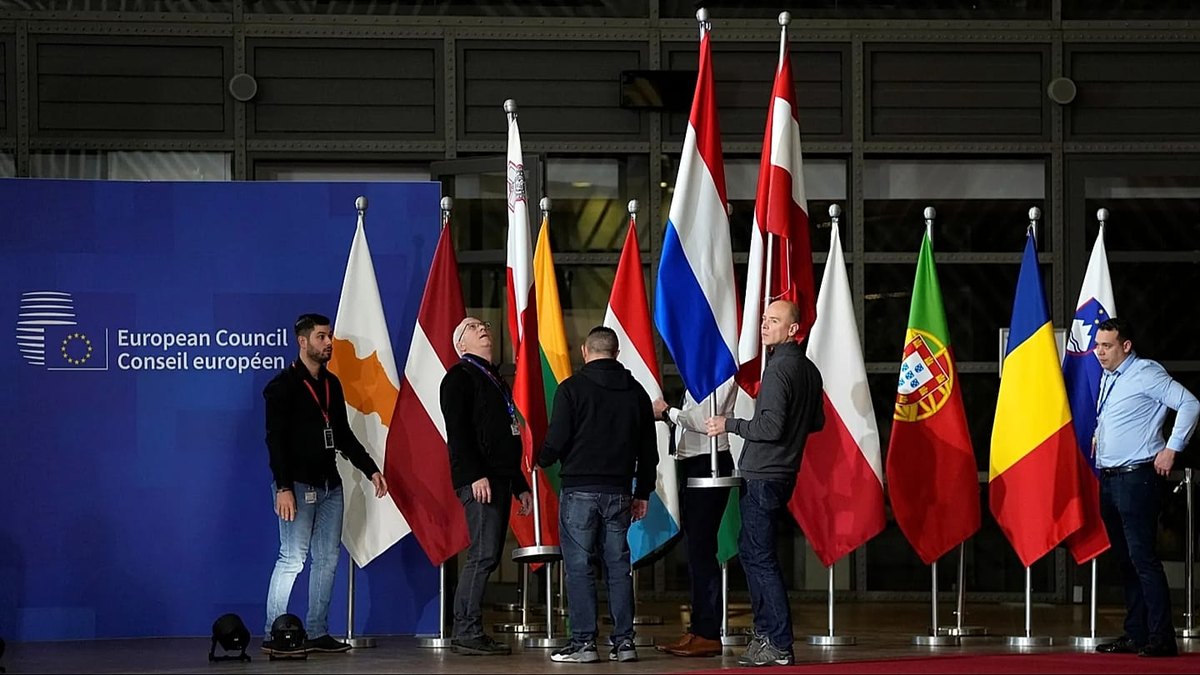
Sawir: Euronews Europe Xigasho