
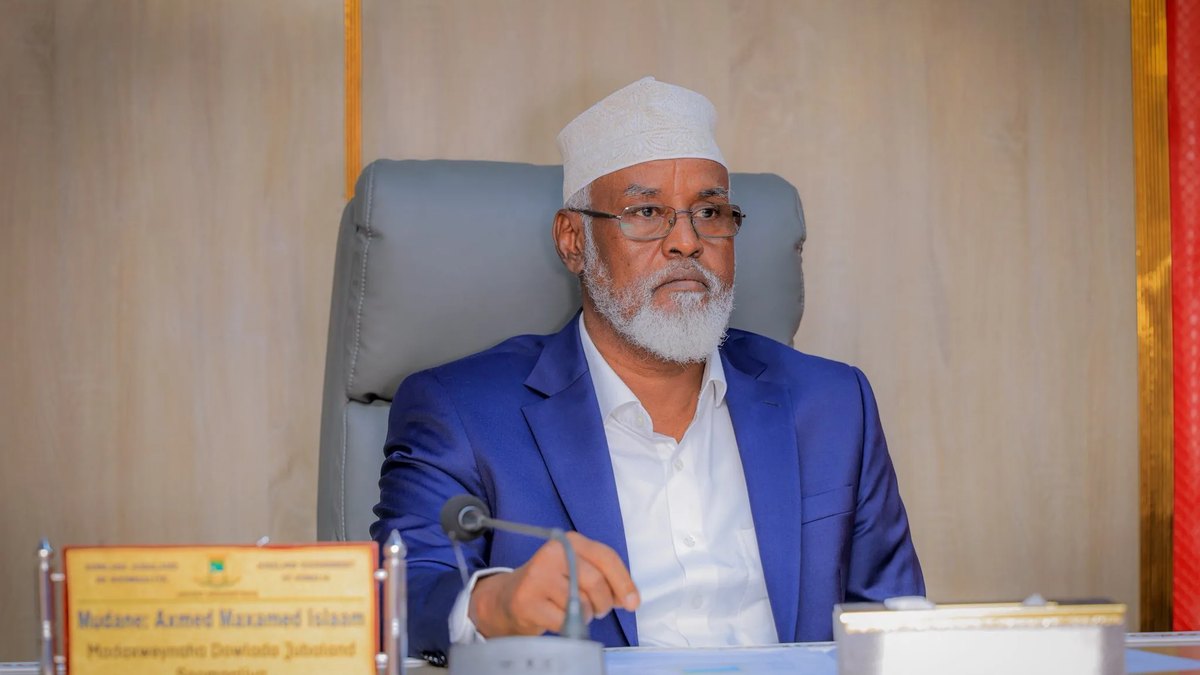
Jubaland oo si adag uga hortimid sharci cusub oo DF u gudbisay Baarlamaanka Federaalka
Wasaaradda Awqaafta iyo Arrimaha Diinta ee Dowlad-goboleedka Jubaland ayaa si rasmi ah uga digday in sharci lagu dhisayo Golaha Culimada Soomaaliyeed uu khuseeyo awoodaha dowlad-goboleedyada, iyadoo sheegtay in aan la wada tashan dowlad-goboleedyada iyo culimada deegaanka.
Qaadacaadda rasmi ah ee Jubaland
Wasaaradda Awqaafta iyo Arrimaha Diinta ee Dowlad-goboleedka Jubaland ayaa si buuxda oo mug leh u qaadacday Hindise-Sharciyeedka Dhismaha Golaha Culimada Soomaaliyeed, kaas oo ay Wasaaradda Awqaafta iyo Arrimaha Islaamka ee Dowladda Federaalka u gudbisay Baarlamaanka Federaalka. Wasaaraddu waxay sheegtay in sharcigan uu yahay mid aan lagala tashan dowladda xubnaha ka ah Dowladda Federaalka, gaar ahaan Jubaland iyo culimada deegaanka Dowladda Jubaland.
Bayaanka kasoo baxay xafiiska Wasiirka Awqaafta iyo Arrimaha Diinta ee Jubaland ayaa sheegay in Golaha Culimada Jubaland iyo Wasaaradda Awqaafta ay si buuxda oo mug leh u qaadaceen Hindise-Sharciyeedka Dhismaha Golaha Culimada Soomaaliyeed, iyadoo loo eegay in aan la raacin hannaanka dastuuriga ah ee nidaamka federaalka.
Doodda awoodaha dowlad-goboleedyada
Jubaland waxay ku doodday in arrimaha diinta iyo bulshada ay ka mid yihiin awoodaha ay leeyihiin dowlad-goboleedyada, iyadoo xustay dastuurka Jubaland iyo heshiisyada lagu dhisay nidaamka federaalka Soomaaliya. Wasaaraddu waxay sheegtay in awoodahaasi aysan si gaar ah ugu koobnayn Dowladda Federaalka, iyadoo ka digtay in meel-marinta hindisahaasi ay saameyn ku yeelan karto awoodaha iyo madax-bannaanida hay'adaha diinta ee dowlad-goboleedyada.
Wasaaradda Jubaland ayaa sidoo kale sheegtay in hindise-sharciyeedka aan laga sameyn wadatashi ku filan oo lala yeesho dowlad-goboleedyada iyo culimada deegaanka, taas oo ay ku tilmaantay inay ka hor imaanayso hannaanka federaalka iyo baahida loo qabo wada-tashi u dhexeeya dowladda dhexe iyo dowlad-goboleedyada.
Mowqifka Dowladda Federaalka
Dowladda Federaalka Soomaaliya waxay sharciyada cusub ku tilmaantay mid uu muddo xileedkiisu dhammaaday, iyadoo u gudbisay Baarlamaanka Federaalka si loo xaliyo arrimaha diinta iyo bulshada ee dalka. Wasaaradda Awqaafta iyo Arrimaha Islaamka ee Dowladda Federaalka ayaa sheegtay in sharcigan uu yahay mid lagama maarmaan u ah horumarka dalka iyo xallinta khilaafaadka diimeed ee ka jira gobollada dalka.
Jubaland ayaa ka digtay in meel-marinta hindisahaasi ay saameyn ku yeelan karto awoodaha iyo madax-bannaanida hay'adaha diinta ee dowlad-goboleedyada iyo sidoo kale qaab-dhismeedka nidaamka federaalka Soomaaliya, iyadoo muhiim u ah in la dhowro awoodaha dastuuriga ah iyo heshiisyada salka u ah nidaamka federaalka.
Jubaland's Ministry of Religious Affairs and Islamic Affairs has formally rejected a federal government draft law proposing the establishment of a national Council of Ulema, arguing the proposal violates regional constitutional powers and was developed without adequate consultation with local authorities and scholars.
Jubaland Issues Formal Rejection
Jubaland's Ministry of Religious Affairs and Islamic Affairs has officially rejected the draft law submitted by the Federal Government's Ministry of Religious Affairs and Islamic Affairs to the Federal Parliament for the establishment of the Somali Council of Ulema. The rejection was issued through an official statement from the Ministry's office in Kismayo, marking a significant intergovernmental dispute over religious governance authority.
The Federal Government described the draft law as one whose term has expired, yet Jubaland maintains that the proposal fundamentally conflicts with the federal system and the constitutional powers reserved for regional states. This disagreement highlights ongoing tensions between Mogadishu and the regional administrations regarding the scope of central versus regional authority in religious affairs.
Constitutional and Consultation Concerns Raised
Jubaland cited the Jubaland Constitution and federal system agreements as the basis for its position, arguing that religious and social affairs fall under the powers of regional states rather than the central government. The Ministry stated the draft law was not prepared through adequate consultation with regional states and local scholars, calling it a violation of federal principles.
The Ministry emphasized that the draft law was not consulted with the Federal Government, specifically Jubaland and local scholars of the Jubaland State, undermining the collaborative framework essential to Somalia's federal structure. This lack of engagement raises questions about the legitimacy of the proposal and its alignment with established constitutional arrangements.
Warnings on Institutional Independence
Jubaland warned that implementing the draft law could affect the powers and independence of religious institutions in regional states, potentially disrupting the existing governance framework. The Ministry stressed that the Somali Council of Ulema cannot be established through a process that bypasses regional participation and scholarly input.
The rejection underscores the importance of respecting constitutional powers and the agreements underpinning Somalia's federal system. Jubaland's stance reflects broader concerns about centralization and the need for inclusive decision-making processes that involve all stakeholders in the federation.
Ilaha iyo xuquuqda sawirka
Sawir: Caasimada Xigasho