
NASA waxay ku doortay koox MIT ah inay noqoto guusha ugu horreysay tartanka LunaRecycle
NASA waxay ku doortay koox ka socota Jaamacadda Massachusetts Institute of Technology (MIT) inay noqoto guusha ugu horreysay muddada labaad ee tartanka LunaRecycle, kaas oo ku saabsan nidaamyada dib-u-dhiska quraaradda hawada sare.
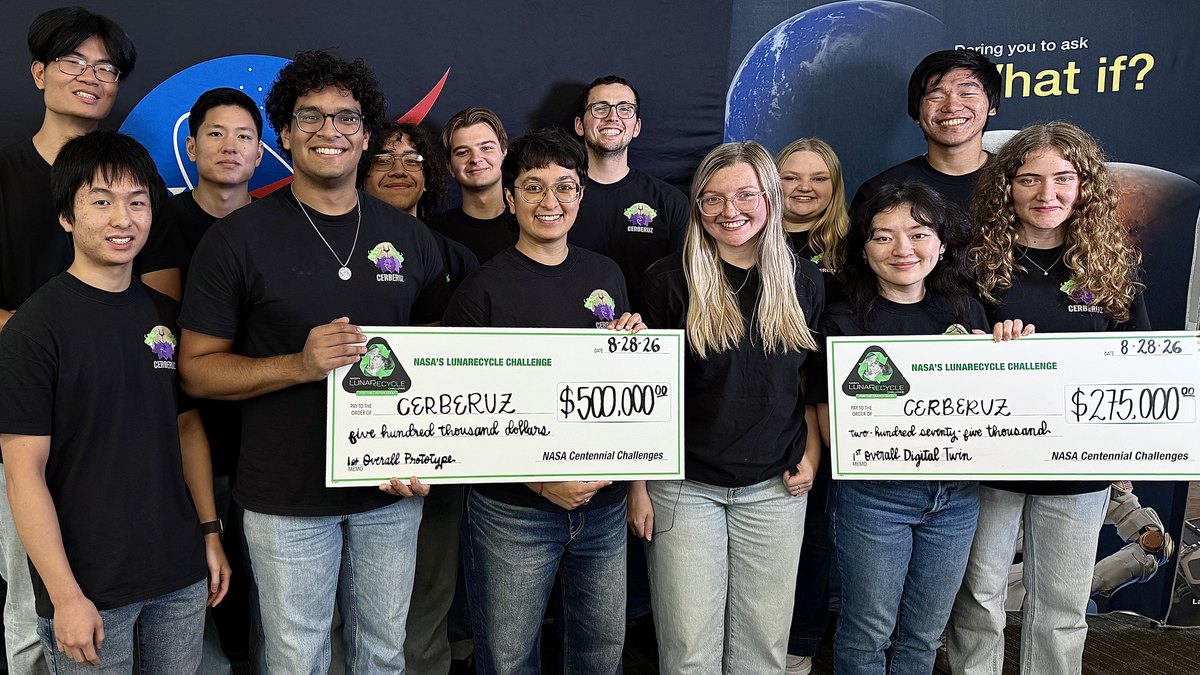
Kooxda MIT waxay heshay $775,000
Kooxda CERBERUZ, oo ka kooban arday ka baxsan heerka jaamacadda iyo macallimiinta MIT, waxay heshay $775,000. Tani waxay ku guuleysatay labada qaybood ee tartanka, kaas oo ku saabsan nidaamyada dhabta ah iyo kuwa diyaarinta model-ka dhexe.
Tignoolajiyadda kooxda waxay quraaradda kala duwan u bedeshay qurux badan, iyadoo loo isticmaalo qalabka Zotek foam sida taageero, halkii loo eedeeyay inay noqoto cudurka. Tani waxay noqonaysaa quruxda loo isticmaalo qalabka injineernimada iyo 3D-ka.
Tartanka waxaa ka qaybgalay 14 kooxood
14 kooxood oo ka socota dalka Mareykanka ayaa isugu yimid Jaamacadda Alabama, Tuscaloosa, muddo 5 maalmood ah, iyagoo muujinaya nidaamyadooda. Tartanku wuxuu ahaa mid $3 milyan ah, kaas oo la wadaagay Jaamacadda Alabama.
Kooxaha kale ee helay dhaqaale ayaa ku jira Terasynth oo helay $225,000, RECLAIM oo helay $50,000, iyo Cislune oo helay $50,000. Tani waxay muujisaa inay jiraan nidaamyada kala duwan ee dib-u-dhiska quraaradda.
Tartanku wuxuu ahaa mid aad u weyn
Muddada labaad ee tartanku waxay ahayd mid aad u weyn, iyadoo 1,200 qof oo ka socda dunida oo dhan ay u qaybsadeen qaybta koowaad. 50 xubnood oo ka tirsan xisaabiyayaasha ayaa doorbiday 17 kooxood oo ka socda 5 dal iyo 9 gobol oo Mareykan ah.
Jennifer Edmunson, maamulaha tartanka, waxay sheegtay inay aad u faraxsan tahay inay aragto tignoolajiyadda oo ka soo baxday fikradda ilaa nidaamka dhabta ah. Tani waxay muujisaa inay jiraan nidaamyada aadka u horumarsan ee dib-u-dhiska quraaradda.
NASA has named the CERBERUZ team from the Massachusetts Institute of Technology as the first prize winner in Phase 2 of its LunaRecycle Challenge, awarding the group $775,000 for a technology that grinds mixed trash into fine powder for use as 3D-printing filament or injection-molded parts.
MIT Team Wins Dual Tracks with Record-Breaking Prize
The CERBERUZ team, composed of undergraduate, graduate, and doctoral students at MIT, secured the top prize in both the prototype development track and the digital twin track of the competition. The technology grinds mixed trash into a fine powder, repurposing materials such as Zotek foam as reinforcement rather than treating it as contamination that needs to be sorted out.
The powder becomes feed for use as injection-mold finished parts or 3D-printing filament, demonstrating a practical solution for reducing waste during missions to the Moon or deep space by recycling common materials, like fabrics, plastics, foam, and metals.
Other Teams Earn Awards Across Prototype and Digital Twin Tracks
Along with the first prize winner, nine teams received prizes in the competition. Second place overall ($225,000) went to Terasynth from Orlando, Fla. with Lunar Re-Forge System, while RECLAIM from Penn State University won Most Innovative ($50,000) in the prototype track.
In the digital twin track, Moon Made from Boulder, Co. with Fiber Forge took second place overall ($125,000), and RECLAIM from Penn State University also won Most Innovative ($25,000). Waste Parrot Technologies from New York, N.Y. received Best Visualization ($25,000), and Terasynth won People's choice ($25,000).
Competition Builds on Record-Breaking Phase 1 Success
Phase 1 of the competition received record-breaking interest from the global innovator community with more than 1,200 registrations, surpassing any competition in the 20-year history of NASA Centennial Challenges. A panel of 50 judges evaluated nearly 200 Phase 1 submissions, selecting 17 teams representing five countries and nine U.S. states as winners.
The LunaRecycle Challenge is managed at NASA's Marshall Space Flight Center by Centennial Challenges, part of the Prizes, Challenges, and Crowdsourcing program within NASA's Research and Technology Mission Directorate. LunaRecycle is also supported by subject matter experts at NASA's Kennedy Space Center in Florida, NASA's Ames Research Center in California's Silicon Valley, and NASA's Langley Research Center, in Hampton, Virginia.
Ilaha iyo xuquuqda sawirka
Sawir: NASA News Releases Xigasho