
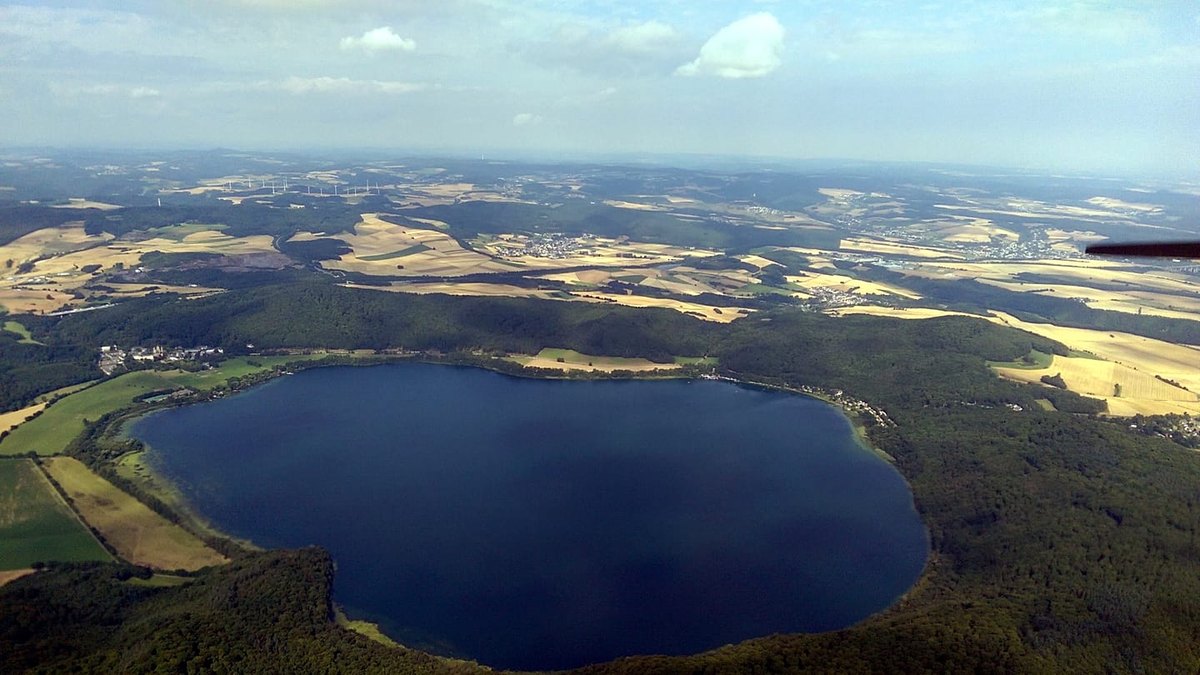
Dhaqdhaqaaq dhul-xoog ah oo cusub ka dhex jira Buur-volcano-ga Laacher See ee Jarmalka
Saynisyahano ayaa diiwaangeliyay in ka badan 500 oo dhul-xoog yar oo ka dhacay hoosta Lake Laach intii u dhaxaysay Sebtembar 2022 iyo Ogosto 2023. Bishii Oktoobar 2025, kordhino cusub oo dhaqdhaqaaq dhul-xoog ah ayaa laga soo warramay Bariga Eifel.
Dhaqdhaqaaq Seismic-ga iyo Calaamadaha Magmatic-ga
Intii u dhaxaysay Sebtembar 2022 iyo Ogosto 2023, saynisyahano ayaa diiwaan geliyay in ka badan 500 micro-earthquakes oo ka hoos dhaca Lake Laach. Habeenkii 10 Oktoobar 2025, waxaa dhacay koox-dhul-xoog aan caadi ahayn oo qiyaastii 92 microquakes yar ay ka dhaceen muddo laba iyo toban saacadood ah.
Dhaqdhaqaaqan ayaa loo aqoonsaday inuu yahay DLF earthquakes. Torsten Dahm wuxuu yiri: "DLF earthquakes are regarded worldwide as an indication of the movement of magmatic fluids at great depth". Daraasaddu waxay muujisay in dareerayaasha magmatic ay urursan yihiin qoto dheer oo ah 12 ilaa 14 kiilomitir.
Kala-saaridda Khatarta iyo Indhaha Mustaqbalka
Wadar ahaan, afar kooxood oo DLF earthquakes ah ayaa laga helay Bariga Eifel shantii sano ee la soo dhaafay. Si kastaba ha ahaatee, cilmi-baarayaashu ma filayaan wax dhaqdhaqaaq volcano ah oo dhowaan dhaca. Ma jirto caddeyn muujinaysa kor-u-kaca oogada dhulka ee Bariga Eifel.
Sannadkii 2024, GFZ waxay sameysay RMT measurements laba goobood oo agagaarka Lake Laach ah, waxaana laga helay CO2 gaas oo asal magmatic leh. Qolka magma ee suurtagalka ah ee hoosta Lake Laach wuxuu u fidaa jiif ah 15 kiilomitir, wuxuuna si tartiib ah u buuxin karaa.
Taariikhda Qaraxii Hore ee Laacher See
Laacher See volcano wuxuu markii ugu dambeysay qarxay qiyaastii 13,084 sano ka hor, oo ah 184 sano ka hor intii hore loo malaynayay. Qaraxu wuxuu socday 10 maalmood, isagoo ku go'ay xilliyo degganaan dheeraad ah.
Cubbadda dambaska iyo pumice-ga waxay samaysay lakab dhumucdiisu tahay 7 mitir dooxada Rhine, halka u dhow volcano-ga ay ahayd 60 mitir. Awoodda qaraxaas waxaa loqiyaasaa inay u dhigantahay 500 bom oo Hiroshima.
Scientists monitoring Germany's Laacher See volcano have recorded more than 500 micro-earthquakes beneath the lake between September 2022 and August 2023, raising questions about whether the dormant volcano remains active deep underground.
Deep Earthquakes Signal Possible Magma Movement
On the night of 10 October 2025, an unusual swarm of around 92 small microquakes occurred within twelve hours in the Eastern Eifel. The strongest quake in the swarm had a magnitude of just 0.9, yet researchers regard these deep low-frequency earthquakes as a worldwide indicator of magmatic fluid movement at great depth.
In total, four spatially confined clusters of DLF earthquakes have been detected in the Eastern Eifel over the past five years. Magmatic fluids appear to accumulate at depths of about 12 to 14 kilometres and may be slowly filling a possible magma chamber that extends horizontally over 15 kilometres beneath the active zone.
No Immediate Threat Despite Powerful Past Eruption
Researchers do not expect any volcanic activity in the near future. The ascent of magma into the shallow crust is almost always accompanied by high-frequency earthquake swarms, which have not yet been observed in the Eastern Eifel. Moreover, there is no evidence of uplift of the Earth's surface, which would have to be clearly detectable in the event of massive magma ascent.
The volcano's last eruption occurred around 13,084 years ago and lasted for 10 days, interrupted by several periods of relative calm. It may have taken around 30,000 years for the upper magma chamber to fill before the eruption eventually occurred, according to a GFZ statement.
Ancient Eruption Was Among Europe's Most Powerful
The explosive power of the Laacher See eruption is estimated to be equivalent to around 500 Hiroshima bombs. Volcanic ash is thought to have risen into the stratosphere and probably reached an altitude of 30 kilometres, with ashfall carried as far as Sweden and Italy.
Volcanic ash and pumice formed a seven-metre-thick layer in the Rhine valley, while near the volcano the layer is thought to be around 60 metres thick. In what is now the Cologne-Bonn region, volcanic ash accumulated to a depth of up to one metre.
Ilaha iyo xuquuqda sawirka
Sawir: Euronews Europe Xigasho