
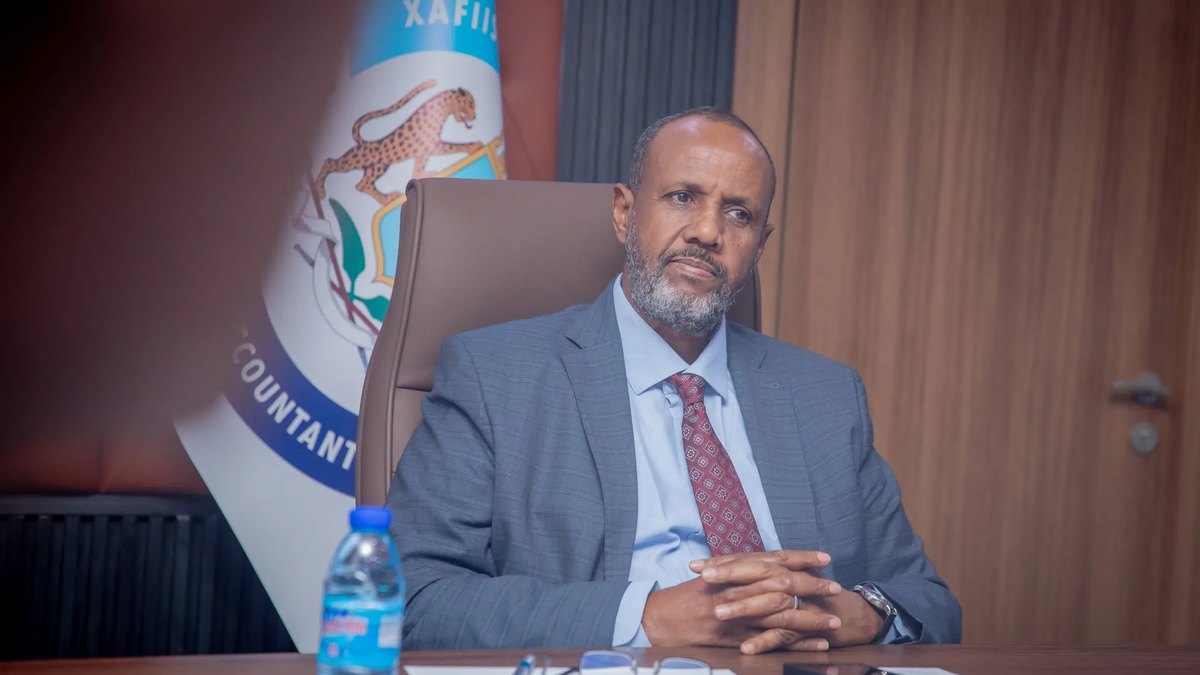
Xisaabiyaha Guud Oo Ku Dhawaaqay Isku-xirka Nidaamka Mushahar-bixinta iyo Aqoonsiga Qaranka
Xisaabiyaha guud ee dowladda Soomaaliya, Maxamed Maxamuud Cabdulle, ayaa maanta warsaxaafadeed soo saaray. Xafiiskiisu wuxuu wasaaradaha iyo hay'adaha dowladda u sheegay in la hirgelinayo isku-xirka nidaamka mushahar-bixinta (SFMIS) iyo nidaamka Aqoonsiga NIRA.
Qorshaha Tijaabada iyo Dhaqangelinta Buuxda
Waxaa la soo xuli doonaa shan hay'adood oo lagu fulin doono tijaabada hordhaca ah (Pilot Test), taas oo bilaaban doonta bisha 1 Oktoobar ee sanadkan 2026. Tani waa tallaabo ugu horreysa ee loogu talagalay isku-xirka nidaamyada dowladda.
Nidaamka waxa si tartiib-tartiib ah loogu ballaarin doonaa dhammaan hay'adaha kale ee dowladda, iyadoo dhaqangelinta buuxda la qorsheynayo bisha 31 Diseembar ee 2027. Qorshahan wuxuu hubinayaa kala guur aan cillad lahayn.
Ujeedada iyo Xaqiijinta Xogta Shaqaalaha
Ujeedka ugu wayn ee barnaamijkan ayaa ah in la xaqiijiyo xogta saxda ah ee shaqaalaha dowladda Soomaaliyeed, iyadoo lagu saleynayo aqoonsiga rasmiga ah, waxana sidoo kale la xoojin doonaa hufnaanta shaqada iyo isla xisaabtanka hay'adaha dowladda.
"Hirgelinta nidaamkan waxaa looga gol leeyahay xaqiijinta aqoonsiga iyo saxnaanta xogta shaqaalaha dowladda, xoojinta hufnaanta iyo isla-xisaabtanka mushahar-bixinta, iyo hubinta in mushaharka dowladda la siiyo shaqaalaha xaqa u leh oo keliya."
Saamaynta Shaqaalaha aan Aqoonsiga lahayn
Hay'ad kasta waxaa laga codsanayaa in ay dib u hubiso xogta shaqaalaheeda ku jira nidaamka mushahar-bixinta, isla markaana ku wargeliso shaqaalaha aan weli haysan Aqoonsiga Qaranka inay si degdeg ah isaga diiwaangeliyaan Hay'adda NIRA. Shaqaalaha aan qaadan kaarka NIRA ayaa saameyn doona nidaamka cusub.
"Marka isku-xirkan si rasmi ah loo dhaqan-geliyo, shaqaale aan haysan Aqoonsiga Qaranka ee NIRA ama aan xogtiisa lagu xaqiijin nidaamka, wuxuu saameyn doonaa Nidaamka Mushahar-bixinta Hay'adda." Dhammaan hay'adaha ayaa laga codsaday in ay arrintaan siiyaan mudnaan.
Somalia's Chief Accountant, Maxamed Maxamuud Cabdulle, has issued a directive to all federal government agencies requiring staff to hold National ID cards issued by the National Identification and Registration Authority (NIRA) before the new payroll system takes effect. The order, announced via a press statement today, links salary disbursement to verified identity records and sets a full rollout deadline of December 31, 2027.
New Payroll System Linked to National ID Verification
The Office of the Chief Accountant has notified all ministries, agencies, and federal offices that it is implementing an integrated payroll system (Payroll/SFMIS) tied to the NIRA identification framework. A pilot test will begin on October 1, 2026, with five agencies selected to trial the system before it is gradually expanded to all government entities by December 31, 2027.
The primary objective of the programme is to verify accurate data on Somali government employees based on official identification, while strengthening accountability and efficiency in salary payments. The statement emphasises that only employees with legitimate entitlements will receive state salaries under the new arrangement.
Staff Without NIRA Cards Will Be Affected by Payroll Rules
Every agency has been urged to review its payroll records and inform employees who do not yet hold a National ID to register with NIRA immediately. The press statement warns that staff who fail to obtain a NIRA card will be directly impacted by the new system, particularly regarding salary disbursement which will be linked to the NIRA identification card.
The Chief Accountant reiterated that once the integration is formally implemented, any employee lacking a NIRA card or whose data has not been verified in the system will be affected by the agency's payroll mechanism. All government agencies have been asked to treat this matter with urgency to avoid disruptions to the financial integrity system.
Government Agencies Urged to Finalise Staff Data Before Deadline
The directive calls on all government bodies to prioritise this initiative and complete verification and registration of their staff to prevent delays or obstacles to the financial integrity system. The transition period between the pilot phase and full implementation is designed to allow agencies to correct inaccuracies and ensure a smooth nationwide rollout.
By tying payroll to verified national identity, the government aims to eliminate ghost workers, reduce fraud, and ensure that public funds reach only those who are legitimately employed. The move reflects a broader push toward digital governance and transparency in Somalia's public financial management.
Ilaha iyo xuquuqda sawirka
Sawir: Caasimada Xigasho