
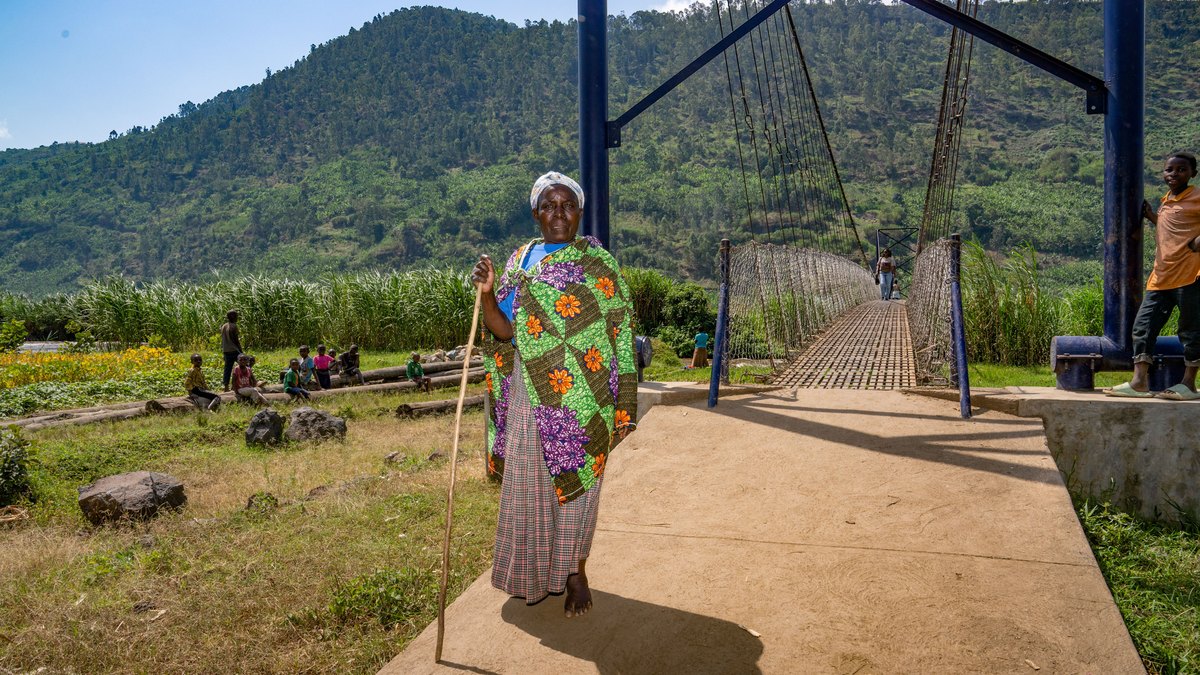
Buundada Cyangoga ee laga taagay dooxada wabiga Mukungwa ee waqooyi-galbeed Rwanda waxay noqotay mid bedeshay nolosha dadka. Waxaa la dhisay 2025, waxaana ay tahay mid ka mid ah 96 buundo oo hay'adda Fika ay dhistay tan iyo 2020.
Dhismaha iyo saamaynta bulshada
Buundada Cyangoga waa buundo lugeyn oo shaandheysan oo ka samaysan sibidh iyo xarig, dhererkeeduna yahay 230 foot, oo isku xira laba deegaan ee dooxada wabiga Mukungwa. Kahor inta aan la dhisin, dadku waxay kireynayeen dooni qaali ah ama waxay maraan jid 3 saacadood ah.
Daraasad ay sameeyeen jaamacadda Colorado Boulder oo uu horkacayo Evan Thomas ayaa muujisay kordhaha isticmaalka guri, dakhliga, beeraha iyo carruurta dugsiga. Buundadu waxay keentay in 134 arday ay dib u qoraan dugsiga.
Kharashka iyo qiimaha maalgelinta
Fika waa hay'ad fariisin ah oo fadhigeedu yahay Kigali, magaceedana ka dhigan 'in la yimaado' afka Swahili. Celcelis ahaan buundo kastaa kharashkeedu waa $100,000, waxaana lacagta yimid dowladda Rwanda iyo USAID ka hor inta uusan maamulkii Trump burburin.
Heerka soo celinta maalgelinta wuxuu ahaa 120%, taas oo ka dhigan in buundadu iska sii bixisay sanad gudihiis. Beeraley samaya khamriga mooska ayaa wax soo saarkoodii kordhay in ka badan saddex jeer, rugta caafimaadna waxaa kordhay 40% dadka imaana.
Caqabadaha dhulka iyo baahiyaha kale
Rwanda waxaa loo yaqaannaa 'dhulka kun buur', waana dal ay adag tahay mashruucyada kaabayaasha sababtoo ah waa buuraley, jiin, oo qoyan. Fika waxay dhistaa laba nooc oo buundo ah, dhulka adag awgeedna looma isticmaalo mashiin culus.
USAID waxay ahayd taageere, laakiin ka dib isbeddelkii maamulkii Trump, dalada dakhiga yar ayay la ilbaxeen. Dadka tuulada ayaa NPR u sheegay in ay u baahan yihiin waddo, koronto iyo biyo nadiif ah.
A new pedestrian suspension bridge in northwest Rwanda has become a catalyst for economic and social change, with a recent study showing that households near the crossing saw higher incomes, more land under cultivation and a 40% rise in clinic visits since the structure opened in 2025.
From Dangerous Crossings to a Permanent Link
Before the Cyangoga bridge was built, communities on opposite banks of the Mukungwa river relied on costly boat hires, slippery timber-log crossings that were often swept away by floods, or a three-hour hike to a narrower point. Naomi Nibishaka, 76, said that when someone attempting the crossing went missing, villagers would search for them, and if it was a rainy day, they would ask the other side if the person had slept over — and if they could not find them, they would look for the body.
The Cyangoga bridge, a 230-foot concrete and cable pedestrian suspension bridge, was completed in 2025 and connects two settlements in the Mukungwa river valley in northwest Rwanda. It is one of 96 bridges built in Rwanda since 2020 by the Kigali-based nonprofit Fika, whose name means 'to arrive' in Swahili. Funding for the programme came from the Rwandan government and donors such as USAID before the Trump administration dismantled the agency's foreign-aid portfolio.
A Study Confirms the Bridges Pay for Themselves
Researchers from the University of Colorado Boulder, including Evan Thomas, conducted a large-scale study that collected tens of thousands of surveys from hundreds of villages and thousands of households to measure the impact of Fika's bridges. Results released in July found increases in household consumption, household income, land cultivated, use of fertilizers and the number of children going to school, with the rate of return on investment standing at 120% — meaning each bridge paid for itself and more within a year of construction.
In the Mukungwa river valley, farmers who produce banana wine more than tripled their output after the bridge opened, while the health clinic on one side recorded a 40% increase in visitors. More than 134 students re-enrolled at a local primary school, and on average each bridge costs about $100,000 to build. Devin Connell, Fika's vice president of programmes, said the bridges are designed to be constructed without heavy machinery because Rwanda's mountainous, steep and wet terrain makes standard infrastructure projects logistically difficult.
Peace of Mind Opens the Door to Further Progress
Marie Gorette Mutuyimana, a primary school teacher who crosses the river twice every weekday, said that before the bridge she sometimes invested her own money in renting bicycles for students and worried constantly about how everyone would get home if it started raining. Now, she says things are different: more than 134 students have re-enrolled and she can focus on teaching. Edward Miguel, a development economist at the University of California, Berkeley, said solving that fundamental transportation problem changes many economic and farming decisions, and the payoff can be really big in the.
Villagers told NPR they urgently need roads, electricity and clean water in addition to the bridges, but Mutuyimana said the bridge was the starting point. 'Primarily, we needed to ensure the safety of ourselves and our children, and the ability to access services,' she said. 'Now that we have that peace of mind, we can ask for the other things we need to improve our lives.' Miguel added that a study like this can show governments what is worth investing in, especially as many lower-income countries struggle to fill the funding gap left by the overhaul of U.S. foreign aid.
Ilaha iyo xuquuqda sawirka
Sawir: NPR News Xigasho