
Aqalka Guud ee Qaramada Midoobay wuxuu go'aansaday in la beddelo mapka adduunka si loo muujiyo meesha Afrika
Aqalka Guud ee Qaramada Midoobay ayaa maanta go'aansaday in la beddelo mapka adduunka ee loo yaqaan Mercator, kaas oo muddo 450 sano ah u muujiyay Afrika inay tahay mid yar, iyadoo la doortay 164 dal.
Go'aanka iyo xaqiiqda mapka
Aqalka Guud ee Qaramada Midoobay ayaa maanta go'aansaday in la beddelo mapka adduunka ee loo yaqaan Mercator, kaas oo muddo 450 sano ah u muujiyay Afrika inay tahay mid yar, iyadoo la doortay 164 dal.
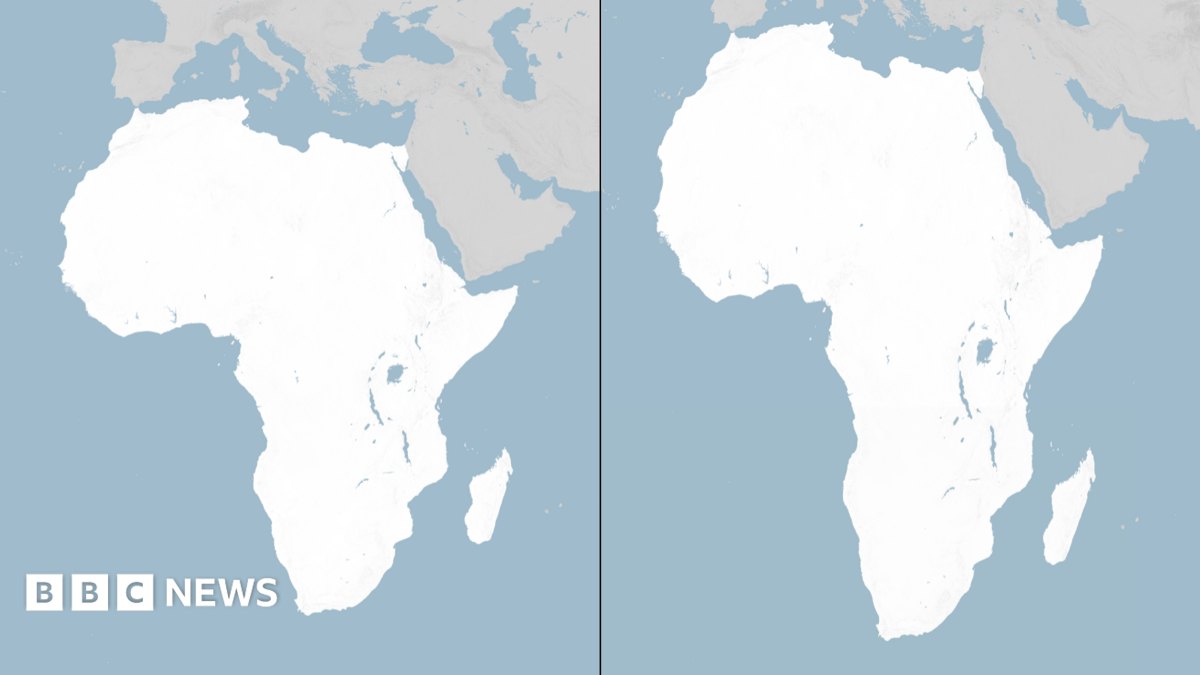
Mapka Mercator, oo la sameeyay sanadkii 1569, wuxuu muujiyaa Afrika iyo Greenland inay yihiin midka midka ah, hase yeeshee Afrika waa 14 jeer weyn, taas oo keentay in la aamino dhaqaalaha iyo horumarka dalalka hooseeya.
Dowladaha taageeray iyo kuwa diiday
Togo waa dalka ugu horreeya ee soo jeediyay go'aanka, iyadoo la taageeray 164 dal, halka Mareykanku uu yahay dalka kaliya ee diiday, wuxuuna sheegay in go'aanka uu yahay mid ka tarjumaya 'dhaqan-sareed' oo aan lahayn xiriir la'aan.
Faransiisku wuxuu sheegay inuu diyaar u yahay inuu ka fogaado mapka Mercator, iyadoo wasiirka arrimaha dibadda Barrot uu yiri: 'Beddelka mapka ma beddelo adduunka, laakiin saxida midka qaldan waa tallaabo caddayn ah.'
Go'aanka iyo horumarka soo socda
Go'aanka ma ahan mid sharci ah, laakiin wuxuu diiradda saarayaa in mapyada loo isticmaalo dugsiyada, warbaahinta iyo hay'adaha caalamiga ah in la beddelo kuwa muujinaya meesha saxda ah ee Afrika.
Togo waa diyaar u ah inay bedesho mapyada dugsiyadeeda inta sanadkan, iyadoo la filayo inay ka shaqeyso in dowladaha kale iyo shirkadaha tiknoolajiyadda ay isku dayaan inay beddelaan mapyadooda.
The United Nations General Assembly voted overwhelmingly to adopt a new world map that more accurately reflects the size of Africa, ending centuries of cartographic distortion caused by the Mercator projection.
A Historic Vote to Correct a Centuries-Old Distortion
The 'Correct the Map' resolution, sponsored by Togo and backed by African Union members, passed with the support of 164 nations, with six abstentions. The United States was the only country to vote against it. The resolution is non-binding but will influence maps used by institutions worldwide.
The Mercator map, designed in 1569 by the Flemish cartographer Gerardus Mercator, has been in common use since the 16th Century. It shows Africa as being of similar size to Greenland, even though it is actually 14 times larger. The Equal Earth projection was created in 2018 by cartographers Tom Patterson, Bernhard Jenny, and Bojan Šavrič.
Leaders and Advocates Call for a Fair Representation
Togo's Foreign Minister Robert Dussey said 'A fair world begins with a fair map.' France's Foreign Minister Jean-Noël Barrot said his ministry was going to stop using the Mercator map. The AU's 54 member states adopted the Equal Earth projection in February.
Yaryna Ferencevych, a US representative at the UN, said the resolution mocked the work and purpose of the UN General Assembly. The US said the resolution promoted an 'ideological agenda' and was a distraction from the 'genuine problems of international peace, prosperity or good relations'.
The Campaign to Ditch the Mercator Map
The resolution does not challenge the use of the Mercator projection for maritime and aerial navigation. Togo hopes to change its school geography materials by the end of the year. The African Union said the resolution promotes equal-area maps like Equal Earth across classrooms, media, and international institutions.
Online campaign group #CorrectTheMap said: 'You could fit the United States, China, India, Japan, Mexico and much of Europe into Africa and still have land to spare.' The resolution aims to address a colonial-era injustice that has visually shrunk Africa for 450 years.