Somalia Oo Dardargelinaysa Kacaanka Ganacsiga iyo Kastamka Marka EAC iyo AfCFTA Ay Muujinayaan Caqabado
Somalia waxay kordhisay dadaallada lagu habeynayo nidaamkeeda ganacsiga iyo kastamka, iyadoo mas'uuliyiin, sharci-dejiyayaal gobol, hogaamiyayaasha ganacsiga iyo la-hawlgalayaasha horumarinta caalamiga ah ay digayeen in xubinimada EAC iyo AfCFTA ay faa'iido yar yeelan doonto haddii aan dib u eegis lagu sameyn.
Shir Heer Sare oo Mogadishu ah
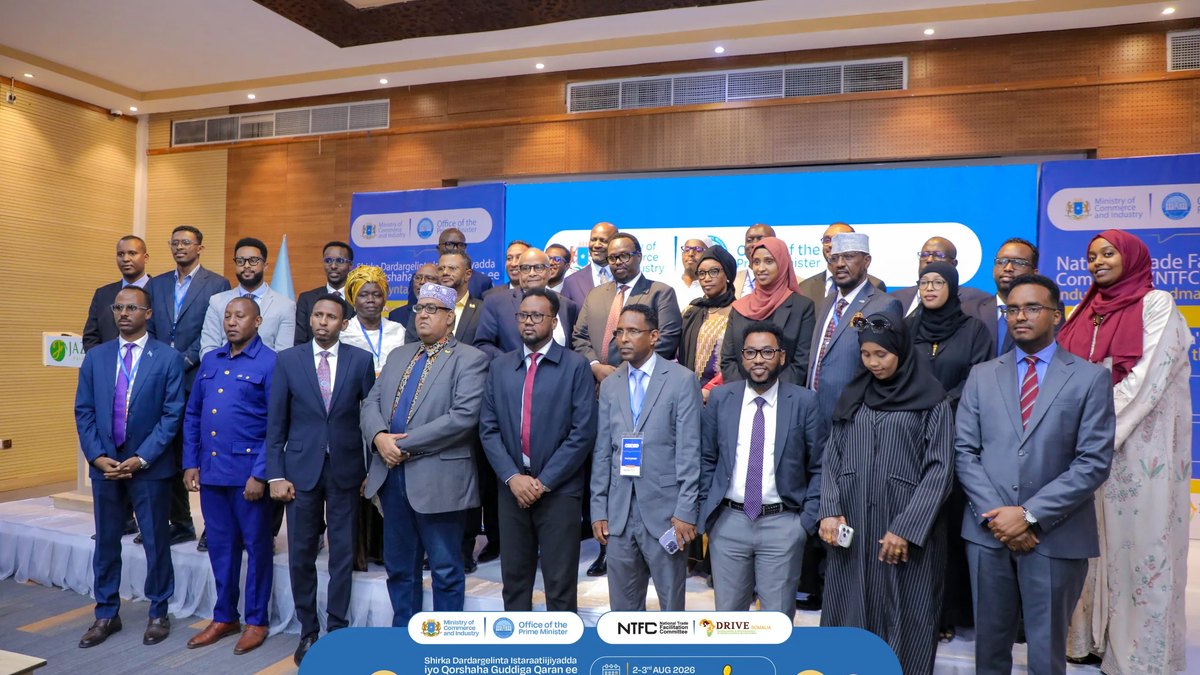
Guddiga Qaranka ee Fududeynta Ganacsiga (NTFC) ayaa ku shiray Mogadishu shir qorsheyn iyo istaraatiijiyad heer sare ah, kaas oo ujeedkiisu ahaa in la ogaado tallaabooyin wax ku ool ah oo lagu yareynayo kharashka ganacsiga, kor loogu qaadayo waxtarka xudduudaha, loona diyaariyo ganacsatada Soomaaliyeed.
NTFC waxay udub-dhexaad u tahay goobta isuduwidda ee dowladda federaalka ee hirgelinta Heshiiska Fududeynta Ganacsiga ee Ururka Ganacsiga Adduunka. Waxay isu keentaa hay'adaha dowladda, maamulka kastamka, ururada ganacsiga iyo la-hawlgalayaasha horumarinta.
Xubinimada Bloc-yada Ganacsiga
Somalia waxay si rasmi ah ugu biirtay Bulshada Bariga Afrika 2024, waxayna ansixisay Heshiiska AfCFTA bishii Oktoobar 2025, taas oo si weyn u ballaarinaysa suuqa suurtagalka ah ee soosaarayaasha iyo dhoofiyayaasha Soomaaliyeed.
Sidoo kale, dalku wuxuu sii ahaanayaa kormeere ku xiran Ururka Ganacsiga Adduunka (WTO) isagoo sii wadaaya geeddi-socodka xubinimada. Tanina waxay muujinaysaa baahida dib-u-habeynta hay'adaha si loo gaaro heerarka caalamiga ah.
Codadka Hormuudka ah iyo Dib-u-eegis
Ibrahim Ahmed Osman, Agaasimaha Guud ee Wasaaradda Ganacsiga iyo Warshadaha, wuxuu ku tilmaamay xubinimada AfCFTA inay tahay 'dhagax-weyn oo ballaarinaya fursadaha ganacsiga, maalgashiga iyo is-dhexgalka dhaqaalaha Afrika'. Rutazana Francine oo ka tirsan EALA waxay ku boorrisay dardargelinta waafajinta sharciga ganacsiga ee heerarka EAC.
Yasin Ibaar wuxuu sheegay in is-dhexgalka gobolku u furmo shirkadaha maxalliga ah suuq macaamiil ah oo ka badan 300 milyan oo qof. Sadaq Mohamed wuxuu yiri waxtarka NTFC lagu xukumi waaya 'tiro shirar ama istaraatiijiyado la ansixiyay, laakiin dib-u-habeynta la cabbiri karo'.
Somalia's National Trade Facilitation Committee convened in Mogadishu to chart a path toward modernising customs and border procedures, warning that membership in the East African Community and the African Continental Free Trade Area will deliver little without urgent reform.
Regional Integration Opens New Markets
The committee's high-level meeting in Mogadishu focused on practical steps to cut trade costs and improve border efficiency so Somali businesses can compete in regional and continental markets. Somalia formally joined the East African Community in 2024 and ratified the African Continental Free Trade Area Agreement in October 2025, significantly expanding potential market access for producers and exporters.
Opening the session, Ibrahim Ahmed Osman, Director General at the Ministry of Commerce and Industry, described Somalia's accession to the AfCFTA as a landmark milestone that expands opportunities for trade, investment and economic integration across Africa. He said the ministry is prioritising reforms designed to simplify cross-border trade, strengthen institutional coordination and improve the competitiveness of Somali businesses.
Harmonisation and Private Sector Demands
Rutazana Francine, a Member of the East African Legislative Assembly, urged Somalia to accelerate the harmonisation of its trade legislation with EAC standards, noting that market access alone cannot generate economic benefits without reforms that facilitate the smooth movement of goods across borders. Yasin Ibaar, Interim Chairman of the Somali Chamber of Commerce and Industry, said the country's regional integration provides local companies with access to a consumer market exceeding 300 million people.
However, he stressed that businesses will only realise those opportunities if customs clearance becomes faster, trade corridors become more efficient and regulations are implemented consistently across government institutions. He argued that reducing administrative delays and improving transparency would significantly lower the cost of doing business while increasing the competitiveness of Somali exports.
Implementation Must Deliver Results
Sadaq Mohamed, Coordinator of the National Trade Facilitation Committee, said the NTFC's effectiveness should be judged not by the number of meetings held or strategies adopted, but by measurable reforms that remove obstacles to trade and expand export opportunities. Sonia Plaza, Senior Economist at the World Bank and Task Team Leader for the Horn of Africa DRIVE Project in Somalia, emphasised that sustained cooperation between public institutions and the private sector remains essential for improving trade competitiveness.
Earlier this year, the United Nations Conference on Trade and Development, with support from the African Development Bank, conducted an intensive capacity-building programme for the NTFC in Mogadishu, introducing a trade reform monitoring framework designed to help track implementation and institutional performance. Somalia remains an observer in the World Trade Organization while continuing its accession process.